
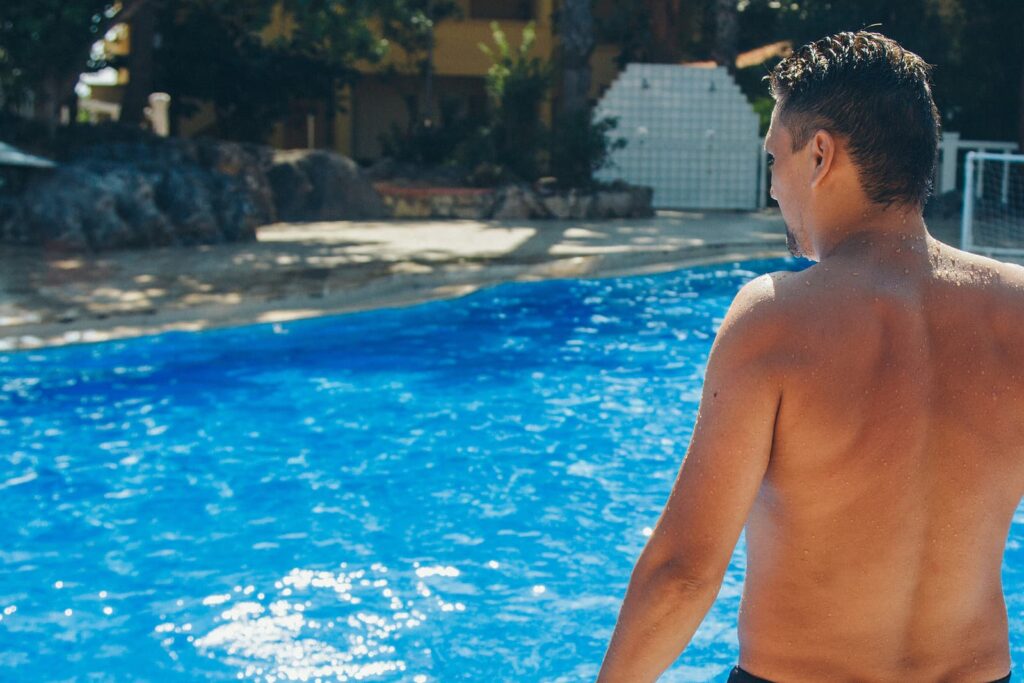
Swimming is one of the best ways to stay active during the warmer months. But if you’re already noticing a receding hairline or thinning on the crown, you might wonder whether chlorine in the pool could be making things worse.
It’s a common concern, particularly during summer when you may be swimming more frequently. While chlorine can affect the condition of your hair, it’s important to separate it from the progress of male pattern baldness. Here’s what you need to know.
Does chlorine cause hair loss?
The short answer is no. There is no strong scientific evidence that swimming in chlorinated pools causes male pattern baldness or permanently damages your hair follicles.
Male pattern hair loss is primarily caused by genetics and a hormone called dihydrotestosterone (DHT). In men who are genetically susceptible, DHT gradually shrinks hair follicles, causing hairs to become finer and shorter over time until they eventually stop growing.
Chlorine doesn’t affect this process. However, that doesn’t mean swimming has no impact on your hair.
Why does chlorine make hair feel different?
Chlorine is added to swimming pools to kill bacteria and keep the water safe. Unfortunately, it can also strip away some of the natural oils that protect your hair and scalp.
After regular exposure, you may notice that your hair feels:
-
- Dry
-
- Rough
-
- Brittle
-
- Tangled
-
- More difficult to style
If your hair is already thinning, these changes can make it appear less healthy or less full than usual. Dry, damaged strands often have less volume, making areas of thinning seem more noticeable.
Can chlorine make thinning hair look worse?
Yes, it can. Although chlorine isn’t causing your hair loss, it can affect the appearance of your existing hair.
When hair becomes dehydrated, individual strands may become weaker and flatter. This reduces volume and can expose more of the scalp, especially around the crown or hairline. Men with fine hair often notice this effect more than those with thicker hair.
So while chlorine isn’t accelerating male pattern baldness, it may make thinning hair appear more obvious temporarily.
Can swimming irritate the scalp?
Swimming can also affect your scalp.
For some people, chlorine may cause:
-
- Dryness
-
- Mild irritation
-
- Flaking
-
- Itchiness
-
- Tightness after swimming
A healthy scalp provides the best environment for healthy hair, so it’s worth looking after it if you’re swimming regularly. Using a gentle shampoo after swimming and avoiding overly harsh hair products can help restore moisture.
Will swimming every day damage my hair?
Frequent swimming means more repeated exposure to chlorine, so your hair is more likely to become dry if you don’t take care of it.
Fortunately, there are simple ways to minimise the effects.
Before swimming:
-
- Wet your hair with clean water first, so it absorbs less chlorinated water
-
- Wear a swimming cap if practical, especially if you swim several times a week
After swimming:
-
- Rinse your hair thoroughly with fresh water as soon as possible
-
- Wash with a mild shampoo designed for frequent use
-
- Use a conditioner to replace lost moisture
-
- Avoid excessive heat styling immediately afterwards
These simple habits can make a noticeable difference.
Can chlorine affect finasteride?
No. If you’re taking finasteride to treat male pattern hair loss, swimming in chlorinated water won’t make the medication less effective. Finasteride works inside the body by reducing levels of DHT, the hormone responsible for male pattern baldness.
Chlorine only comes into contact with the outside of your hair and scalp, so it doesn’t interfere with how the medication works. You can continue swimming as normal while taking finasteride.
When should you consider hair loss treatment?
If you’ve noticed that your hairline is steadily receding or thinning around the crown, it’s worth seeking advice sooner rather than later.
Hair loss treatments such as finasteride (the cheap generic version of Propecia) are generally most effective while hair follicles are still producing hair. Once follicles have stopped functioning completely, it’s much harder to regain lost hair.
Starting treatment early may help slow further hair loss and preserve more of your existing hair. Chlorine may leave your hair feeling dry, rough or less manageable, but it isn’t the cause of male pattern baldness.
Looking after your hair with good post-swim care can reduce the cosmetic effects of chlorine, while treating the underlying cause of male pattern hair loss requires a different approach.