
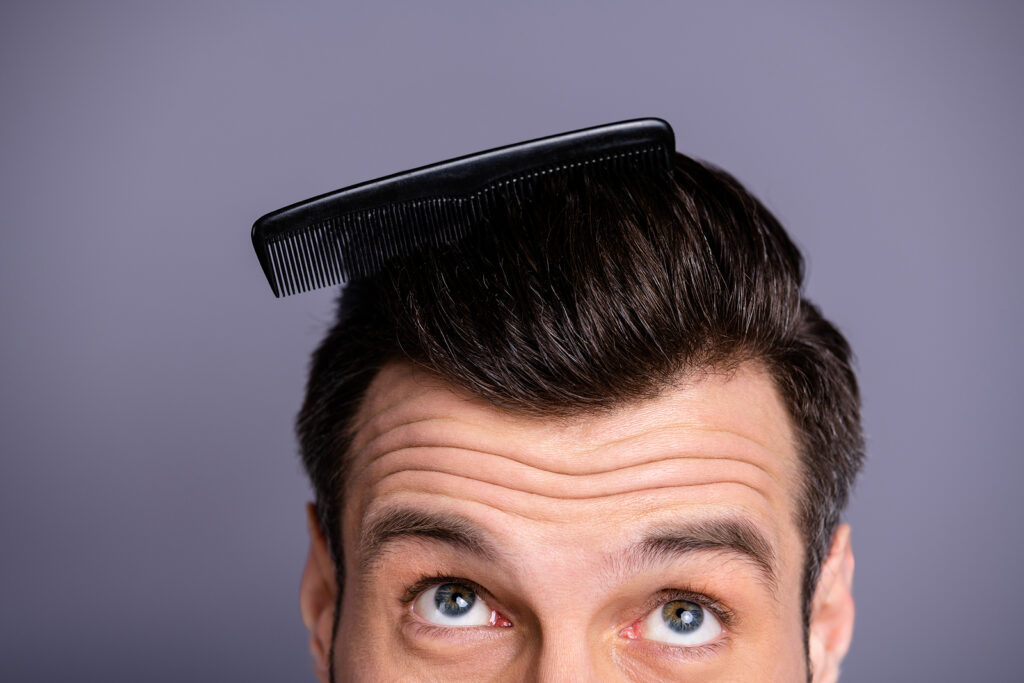
For many men, hair loss doesn’t suddenly appear later in life; it starts slowly in their 20s and gathers pace through their 30s. A slightly higher hairline, more scalp showing under bright light, or extra hair in the shower drain can all be early signs.
If this sounds familiar, now is the best time to act. If you catch hair loss early, you have far more control over slowing it down, and in many cases, maintaining a thick, healthy head of hair long-term. Here’s how to do it properly.
How do you know if your hair is starting to thin?
Most men don’t notice hair loss until it’s already progressed. The key is spotting subtle changes early:
- A gradually receding hairline (especially at the temples)
- Thinning around the crown
- Hair looking flatter or less dense than before
- Increased shedding during washing or styling
If you’re questioning it, there’s usually a reason. Hair loss is progressive, so waiting rarely works in your favour.
What causes hair loss in your 20s and 30s?
The main driver is male pattern baldness, a genetic condition linked to sensitivity to dihydrotestosterone (DHT, a hormone derived from testosterone).
DHT gradually shrinks hair follicles, leading to:
- Thinner, weaker hair
- Shorter growth cycles
- Eventually, follicles stopping hair production altogether
Other factors can make things worse:
- Chronic stress
- Poor nutrition
- Lack of sleep
- Aggressive styling or harsh products
But for most men, genetics and DHT are the core issue.
Can you actually keep your hair thick?
Yes, but only if you’re realistic about what works.
There are two key approaches:
- Protect the hair you have
- Slow or stop further miniaturisation (shrinking of the hair follicles)
You’re not trying to fight nature; you’re aiming to control the rate of loss and maintain density.
1. Start treatment early
If you do one thing, explore clinically proven hair loss medications. Treatments that target DHT are the most effective, including finasteride (the cheap generic version of Propecia). The earlier you start, the more hair you keep.
Waiting until thinning is obvious often means:
- Less regrowth potential
- More noticeable density loss
- Longer recovery (if any)
Men who act early typically maintain a fuller look for years longer than those who delay.
2. Be consistent, not reactive
A common mistake is starting treatment, stopping, then restarting months later. Hair loss doesn’t pause just because you’re inconsistent.
To keep your hair thick, you need:
- A steady routine
- Patience (results take months, not weeks)
- Long-term thinking
Think of it like fitness: you don’t keep results without consistency.
3. Don’t rely on shampoos alone
There’s a lot of marketing around ‘thickening’ or ‘anti-hair loss’ shampoos.
Reality check:
- They can improve appearance (volume, texture)
- They don’t stop DHT-related hair loss
Use them as a support tool rather than as your main strategy.
4. Combine hair loss treatments for better results
Men who get the best outcomes often combine approaches rather than relying on one solution.
This might include:
- A DHT-blocking treatment
- A topical growth stimulant
- Supportive hair care products
This layered approach tackles hair loss from multiple angles, helping you maintain thickness more effectively.
5. Get serious about your lifestyle
While genetics lead the process, your lifestyle influences how aggressively hair loss progresses.
Focus on:
- Protein intake (hair is made of keratin)
- Iron and micronutrients
- Sleep quality
- Stress management
High stress and poor recovery can push more hairs into the shedding phase, making thinning look worse.
6. Avoid hairstyles that expose thinning
If you’re starting to lose density, certain styles can make it more obvious:
- Harsh fades that expose the scalp
- Very long hair without volume
- Wet-look products that separate strands
Instead, go for:
- Textured styles
- Medium length with natural volume
- Matte products for a fuller look
Small styling changes can make a noticeable difference.
7. Track your hair over time
Hair loss is gradual, which makes it easy to ignore.
Take monthly photos:
- Front hairline
- Temples
- Crown
This helps you:
- Spot changes early
- See whether treatment is working
- Stay accountable
Most men either panic too early or act too late, so tracking helps keep you grounded.
What’s the biggest mistake men make with hair loss treatment?
Waiting: hair loss rarely reverses itself. By the time it becomes obvious, you’ve already lost ground. Men who keep their hair thick into their 30s usually have one thing in common:
They acted early and stayed consistent.
Keeping your hair thick in your 20s and 30s means understanding what’s happening and taking control early. If you’re noticing changes, don’t ignore them. The sooner you respond, the more options you have, and the better your results will be.